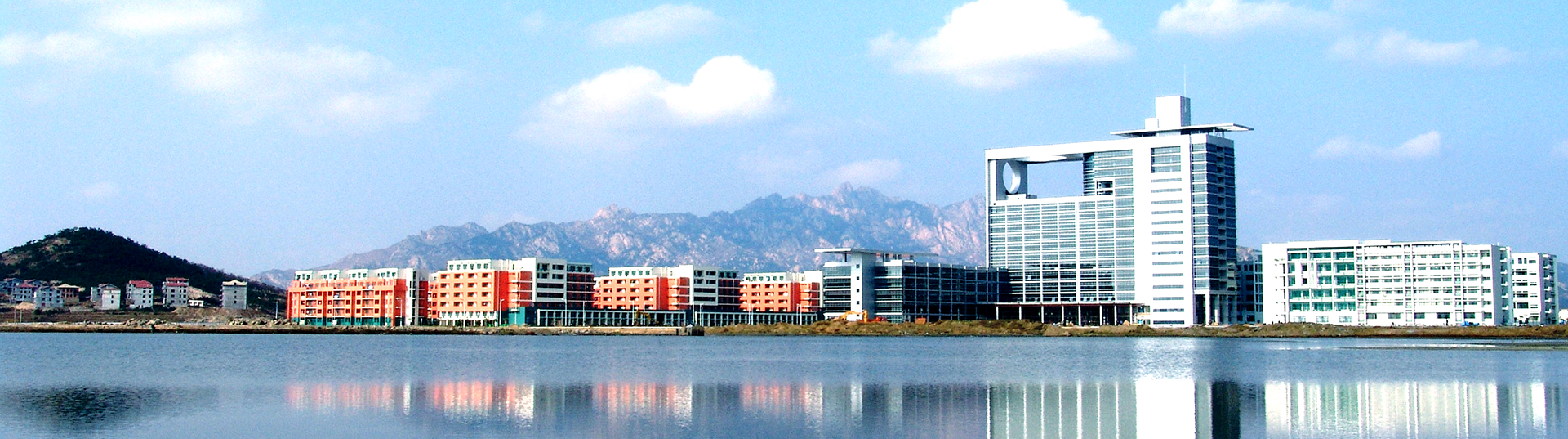
On April 3, a delegation from the Republic of Tatarstan, Russia, visited China University of Petroleum (East China) (UPC). The delegation included Albert Khalisovich Gilmutdinov, Assistant to the Head of the Republic of Tatarstan; Alishev Timirkhan Bulatovich, Vice President of Kazan Federal University; and Zhang Dali, Director of the Chinese Preparatory Program. UPC leaders Wu Qiangming, Secretary of the Party Committee, and Dai Caili, Vice President, met with the delegation and held discussions. The two sides had in-depth exchanges on scientific and educational cooperation and talent development under the framework of the 2026-2027 “China-Russia Year of Education,” exploring a new vision for collaboration between Chinese and Russian universities in the energy sector.
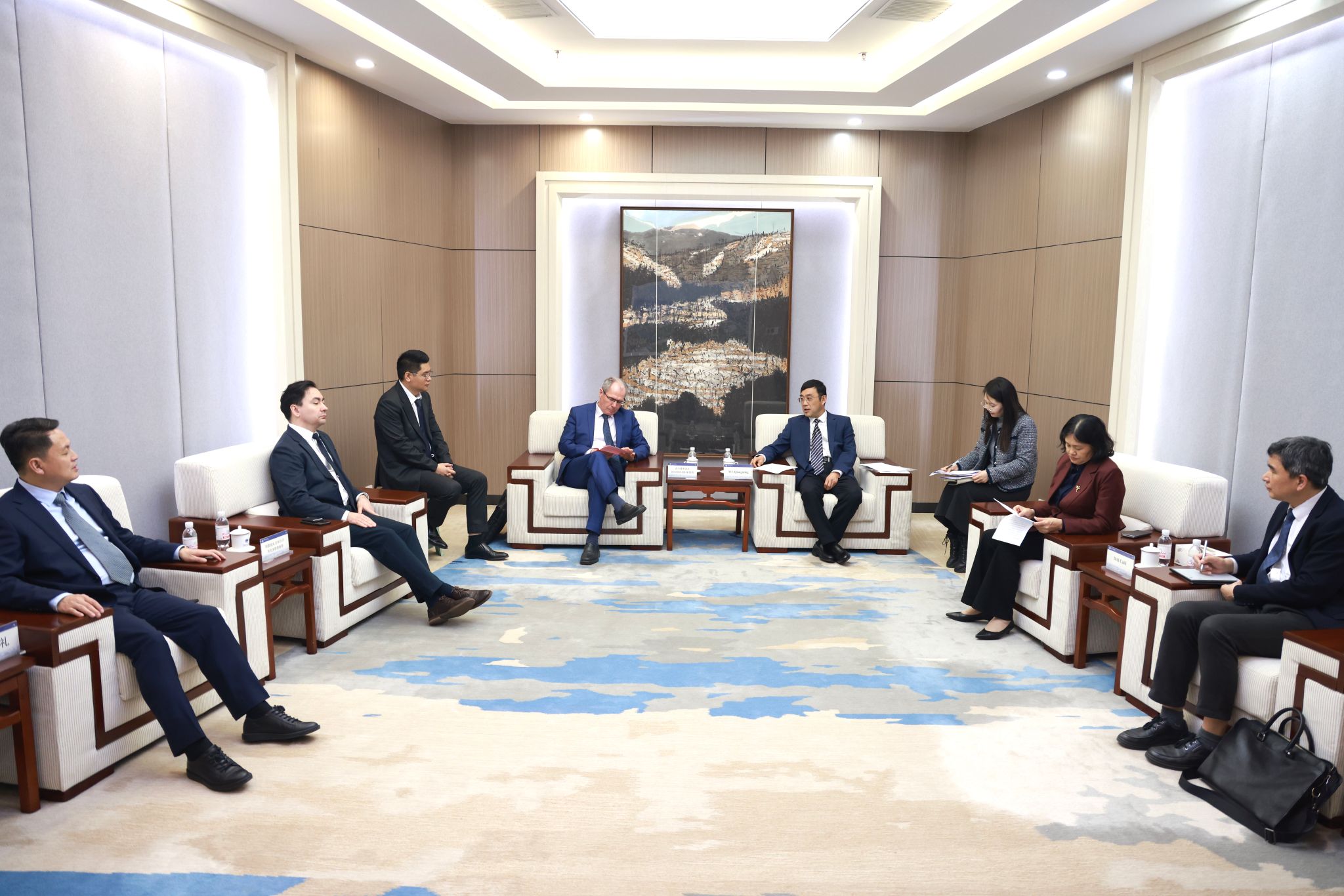
Secretary Wu Qiangming extended a warm welcome to the delegation and shared UPC’s development and educational strengths, as well as its ongoing cooperation with Russian universities, particularly Kazan Federal University. He noted that 2026 marks the start of the China-Russia Year of Education and serves as a new starting point for elevating bilateral cooperation to a higher level between the two universities. He hoped that this visit would serve as an opportunity to further expand and deepen cooperation under the “China-Russia Advanced Technology University” project, yielding more tangible results in talent cultivation, scientific research, and academic exchanges. Mr. Gilmutdinov highlighted the industrial advantages and higher education system of Tatarstan, as well as the progress of the “China-Russia Advanced Technology University” project, which is jointly led by Shandong Province and the Republic of Tatarstan. Both sides agreed to jointly advance the development of the “China-Russia Advanced Technology University.”
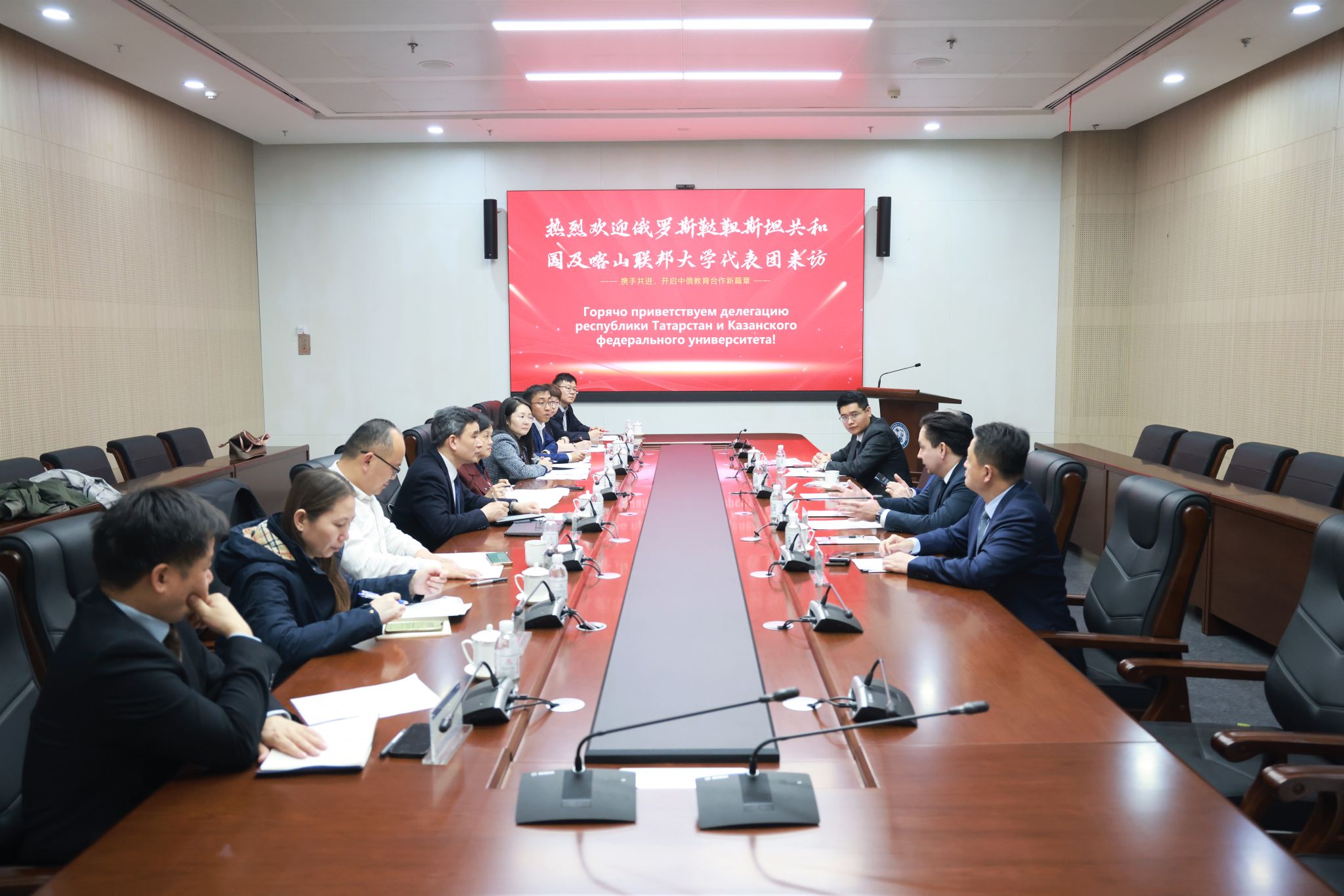
During the symposium, the two universities shared information on their respective educational strengths, disciplinary structure, student development, and scientific research endeavors. In-depth discussions centered on joint research in deep oil and gas development and low-carbon energy technologies, joint establishment of research platforms, co-application for international research projects, and brand events for the China-Russia Year of Education. The two parties reached a consensus on cooperation, agreeing to leverage their respective disciplinary strengths, research capabilities, and human resources to carry out diverse exchange and collaboration activities, thereby enriching the cooperation outcomes of the China-Russia Year of Education.
During the visit, the delegation toured UPC’s History Museum to learn about its development journey.
Located in the eastern part of the East European Plain, the middle reaches of the Volga River, Tatarstan is one of Russia’s most economically developed regions. It ranks second in Russia in terms of oil reserves and is home to dozens of higher education institutions, including Kazan Federal University and Kazan National Research Technical University, as well as renowned research institutions such as the Kazan Scientific Center of the Russian Academy of Sciences.
Translated: Sun Yuqi, Geng Haiwei
Reviewed: Xu Xiaoyan
Updated: 2026-04-15